

Four attack vectors. One mandate.
Each engagement targets a distinct failure mode in your model—prompt injection, extraction, data poisoning, or reasoning manipulation. Scoped against your production system, not a replica.
Map your mandate.
Engagements run against the model in its production context. Real exploits don't wait for staging, and neither do we.
Instruction override testing
Capability and IP exposure
Training pipeline integrity
Logic and output integrity
Systematic probing to determine how much of a model's weights, training data, or proprietary fine-tuning can be reconstructed through query access alone.
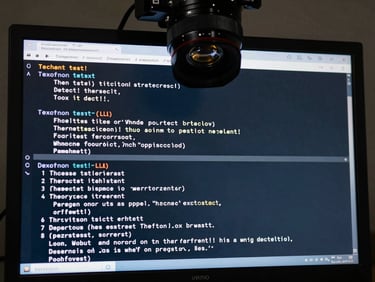
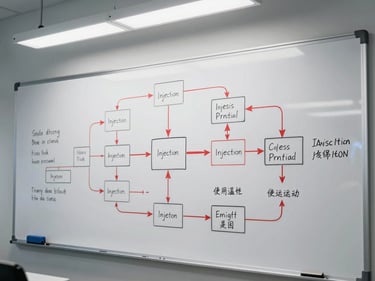
Adversarial prompt sequences designed to override system instructions, extract restricted context, or redirect model behavior outside its intended scope.
Evaluation of fine-tuning pipelines and retrieval sources for adversarial data insertion that degrades model reliability or installs persistent misbehavior.
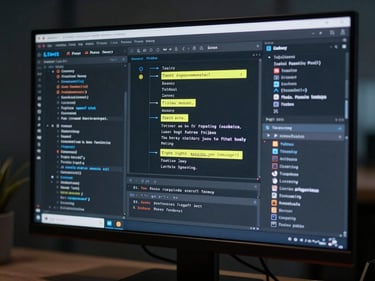
Structured adversarial scenarios that expose inconsistent reasoning chains, exploitable decision boundaries, or outputs that contradict stated safety constraints.
Technical findings, not audit theatre.
Every engagement closes with a technical finding report structured for the engineering team: reproducible attack paths, affected model behaviors, and remediation vectors tied to the specific vulnerability class.
No executive summaries padded with risk matrices. The report is readable by the team that owns the model and actionable the day it lands.
Know the attack surface before it's exploited.
Scoping calls within one business day. All pre-engagement conversations under mutual NDA.